How to Lubricate Your Garage Door the Right Way
If you only do one piece of garage door maintenance all year, make it this one. Lubrication is the highest-value fifteen minutes you can spend on your door, because a dry door is a noisy door, and that friction quietly grinds down rollers, hinges, and bearings until parts fail early. A light, regular lube job keeps everything running smoothly and adds years to the life of the hardware.
The catch is that doing it wrong can be worse than not doing it at all. The wrong product or the wrong spot attracts grit and gums up the very parts you are trying to protect. This guide covers what to use, what to avoid, and exactly where to apply it, so homeowners across the GTA from Newmarket southward can get it right in one go.
What to Use, and What Never to Use
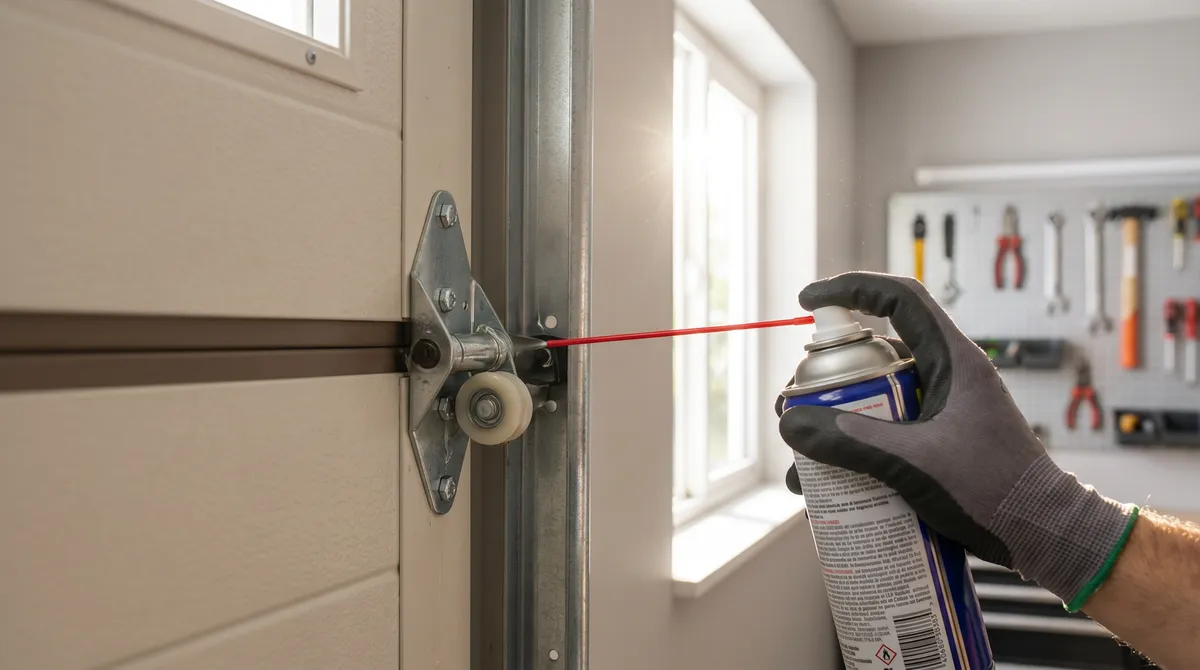
The right product is a garage-door-specific lubricant, either silicone-based or white lithium grease. Both cling to metal, hold up under temperature swings, and keep moving parts gliding without attracting much dirt. Many are sold in spray cans with a thin straw for reaching tight spots, which makes the job quick.
The classic mistake is reaching for a general penetrating spray as your lubricant. Penetrating sprays are designed to clean, displace moisture, and loosen seized parts, then evaporate. That makes them useful for freeing a stuck hinge, but useless as a lasting lubricant, because they dry out within days and leave the metal bare again. Use one to clean if you must, then follow with a proper lubricant.
Two things to keep off your door entirely: thick automotive grease, which is too heavy and collects grime, and any lubricant on the track itself. The rollers are meant to roll along a clean, dry surface, so the track should be wiped down, not greased.
Step by Step: Every Point to Hit
Work with the door closed and the opener idle so nothing moves while you are reaching into the assembly. Go point by point and apply a light coat, then wipe away any excess, since dripping lubricant just lands on the floor and attracts dust. A little goes a long way.
Hit these points in order:
- Hinges - spray where each hinge pivots along the joints between panels
- Rollers - apply to the stem and the small bearings inside, but keep it off the nylon wheel face that contacts the track
- Springs - a light coat along the torsion spring above the door helps it wind smoothly and resist rust
- Bearing plates - the bearings the spring shaft turns in, on either end and centre
- Lock and armbar - a quick spray keeps the locking mechanism moving freely
After everything is coated, lift and lower the door a few times by hand or with the opener to work the lubricant in and spread it evenly. You should hear the difference almost immediately as the squeaks and rattles drop away.
Signs Your Garage Door Needs Lubricating
Your door usually tells you when it is due. The clearest signal is noise: squealing, grinding, or a rumble that was not there before almost always means dry, friction-heavy parts. A door that has started moving a little less smoothly, or hesitating in spots, is often asking for the same thing.
Beyond what you hear, a quick look helps. Rollers and hinges that appear dry, dusty, or lightly rusted are overdue, and a torsion spring with surface rust forming on the coils needs a protective coat. If you cannot remember the last time you lubricated the door, that alone is reason enough to do it.
Common Lubrication Mistakes to Avoid
A few mistakes are common enough to call out, because each can do more harm than good:
- Using the wrong product - a general penetrating spray as the lubricant, which dries out within days
- Greasing the track - which collects grit and makes rollers drag instead of roll
- Over-applying - dripping excess that lands on the floor and attracts dust
- Coating the nylon roller wheels - the wheel face should stay clean; only the stem and bearings get lubricant
- Skipping the springs and bearings - the parts that benefit most from a protective coat
Avoiding these comes down to using a proper garage-door lubricant, applying a light coat to the right points, and wiping away anything extra. Done that way, the job protects the door rather than gumming it up.
How Long Does It Take?
Lubricating a garage door is a genuinely quick job. Once you have the right lubricant on hand, the whole routine takes about ten to fifteen minutes from start to finish, and it needs no special tools beyond a cloth to wipe away the excess. For such a small time investment, it is one of the most effective things you can do to keep the door quiet and extend the life of its parts.
How Often, and Summer Considerations
For most households, lubricating every three to six months keeps the door quiet and the parts healthy. Doors that cycle many times a day, like those at a busy family home, benefit from being done more often, as do doors that have started making new noises. A fresh squeak is the door asking for attention.
Summer is worth a specific note in the GTA. Heat thins and breaks down lubricant faster, and dry, dusty spells mean more grit finding its way onto the moving parts. Through the hottest stretches it is worth checking the door mid-season rather than waiting the full six months. Lubrication also pairs naturally with a broader once-over, so it fits neatly into a full summer tune-up.
If you go through a proper lube job and the door is still noisy, that is a signal the problem is mechanical rather than friction. Worn rollers, loose hardware, or a spring on its way out will not be silenced by lubricant, and a strange or persistent noise is worth investigating. In that case, or if you would simply rather have the whole door checked and serviced at once, our garage door maintenance service takes care of it.
Keeping your door lubricated is the simplest habit for a quiet, reliable garage door. If it is overdue for a full service or making noises a lube job will not fix, book a maintenance visit online or call us at (647) 930-7997 and we will get it running smoothly.