Insulated vs Non-Insulated Garage Doors: Which Is Worth It in Ontario?
Walk into any garage door showroom in Ontario and the first upsell you will hear is insulation. It is worth understanding before you spend, because the honest answer to whether you need it is not about keeping the garage “warmer” in the abstract. It comes down to what sits next to and above your garage, and how you actually use the space.
An insulated door earns its keep when the garage is attached to the house, has a room over it, or doubles as a workshop or gym. For a standalone, unheated garage at the back of the lot, the case is much weaker. This guide breaks down the real differences so you can decide what fits your home and budget, whether you are planning a new garage door installation or replacing an aging door across the GTA from Aurora southward.
What R-Value Actually Means
R-value measures how well a material resists heat transfer. The higher the number, the slower heat moves through the door, in either direction. A basic single-layer steel door sits somewhere around R-0 to R-6, which is to say it does very little. A well-built insulated door can reach R-12 to R-18 or more, depending on the core.
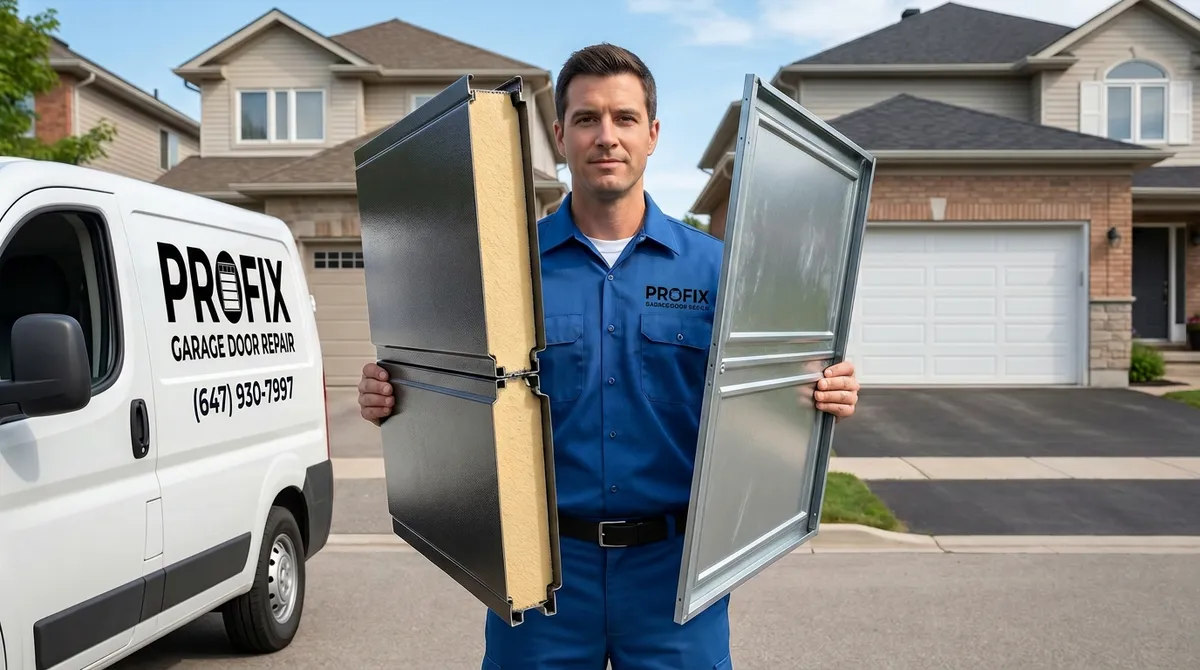
There are two common insulation types. Polystyrene is a rigid foam board slotted between the panels, offering solid mid-range performance at a friendly price. Polyurethane is foam sprayed directly into the door, where it expands and bonds to the steel, producing a higher R-value and a stiffer, quieter, more durable door at a higher cost.
One caution about marketing numbers: some manufacturers quote the R-value of the insulation material itself rather than the finished door, including its frame and gaps. Ask for the door’s overall rating, and treat a single big number on a brochure with healthy skepticism.
Insulated vs Non-Insulated: Side by Side
For most Ontario homeowners the decision turns on a handful of practical factors rather than R-value alone. Cost, noise, durability, and the load on your opener all shift depending on which way you go, and the right choice is the one that matches how the garage is used.
The table below lays out the trade-offs at a glance.
| Factor | Non-Insulated | Insulated |
|---|---|---|
| Construction | Single layer of steel or aluminum | Two layers around a polystyrene or polyurethane core |
| Upfront cost | Lower | Typically $300 to $900 more |
| Energy efficiency | Minimal (about R-0 to R-6) | Higher (about R-9 to R-18+) |
| Noise | Louder, more rattle | Quieter operation, dampens outside noise |
| Dent resistance | Dents more easily | Stiffer, more durable |
| Weight on opener | Lighter | Heavier, size the opener to match |
| Best suited to | Detached, unheated garages | Attached garages, rooms above, workshops |
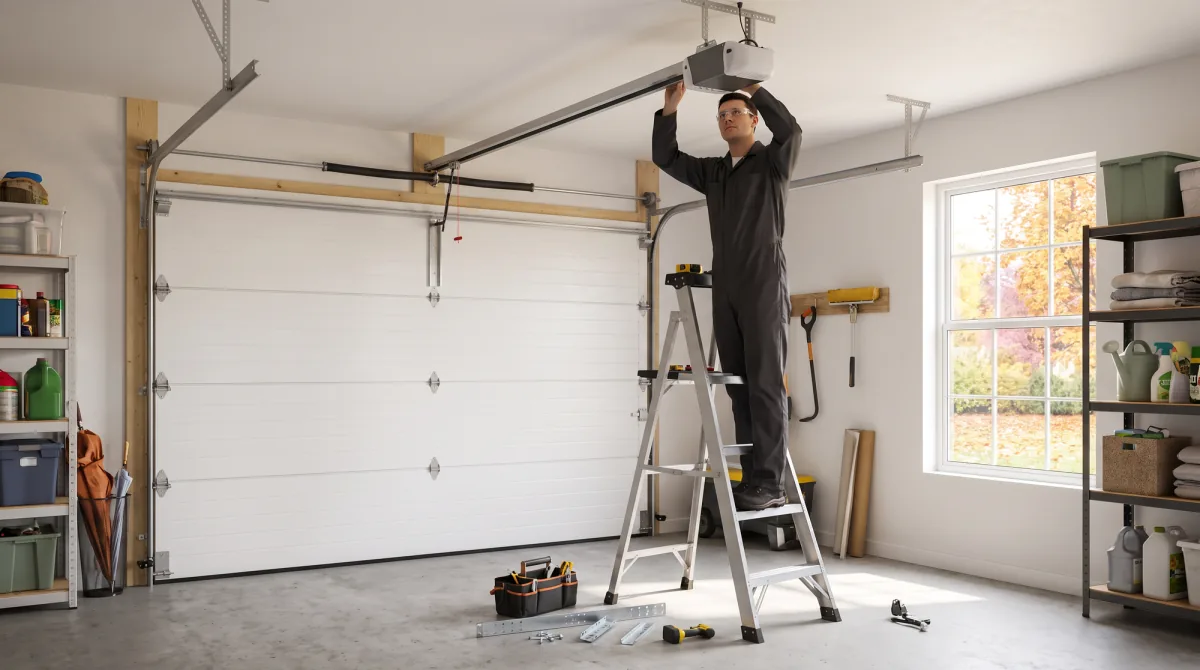
A heavier insulated door is not a problem on its own, but it does mean the garage door opener should be matched to the added weight. On a full installation this is handled for you; if you are only swapping the door, factor it in.
When Insulation Is Worth It in Ontario
If your garage is attached to the house, insulation almost always pays off in comfort. The shared wall and any ductwork mean an uninsulated garage drags down the temperature of the rooms next to it, and your furnace and air conditioner work harder to compensate. An insulated door turns that buffer zone into something far more stable through both the January cold and the July heat.
The case is even stronger when there is a finished room above or beside the garage, such as a bonus room or home office. Here insulation does double duty, holding temperature and dampening the noise of the door so it does not rattle the room every time someone comes or goes. The same goes for anyone using the garage as a workshop, gym, or hobby space they want to spend time in.
West-facing attached garages are a quiet case for insulation in summer specifically. Afternoon sun can turn that space into an oven, and an insulated door noticeably slows the heat soaking into the home. If any of these describe your setup, an insulated door is money well spent.
When You Can Skip It
Not every garage needs an insulated door, and there is no sense paying for performance you will not feel. A detached garage sitting away from the house, with no heating and no finished space, gains very little from insulation beyond a slightly steadier interior. The energy argument essentially disappears once the garage is not connected to your living space.
Budget is a legitimate factor too. If you are choosing between an insulated door now or a better opener, smarter safety features, or a style that lifts your home’s curb appeal, a non-insulated door on a detached garage is a perfectly sound place to save. You can always prioritize where the benefit is real.
That said, even on a detached garage some homeowners like a modest insulated door for the quieter operation and the extra dent resistance, since the stiffer construction simply holds up better over time. If durability matters more to you than energy savings, that is a fair reason to step up. For other style and build decisions, our guide to the best sectional garage doors for homes is a useful next read.
Still not sure which way to go for your home? Book a free consultation online or call us at (647) 930-7997, and we will walk your garage, talk through how you use it, and recommend the door that genuinely fits, with an upfront quote and no pressure.