Childproofing Your Garage Door: A Safety Guide for Families
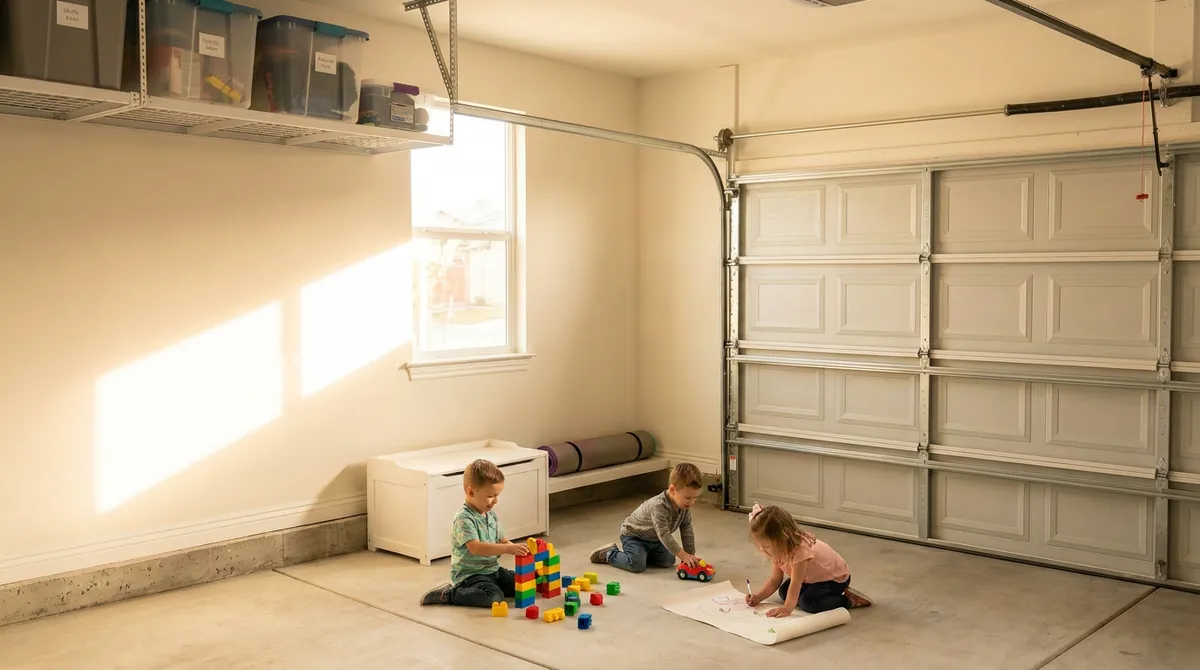
Childproofing a garage door starts with confirming the safety reversal actually works, then securing the controls out of reach and addressing the pinch points. The door is the largest and heaviest moving object most children encounter every day, so a handful of focused steps make a real difference.
It is easy to overlook because it works quietly in the background, but a garage door deserves the same safety attention as a pool or a staircase. This guide walks through the steps in priority order, from the systems that protect against the worst outcomes to the everyday habits that keep kids safe.
Start by Testing the Safety Systems
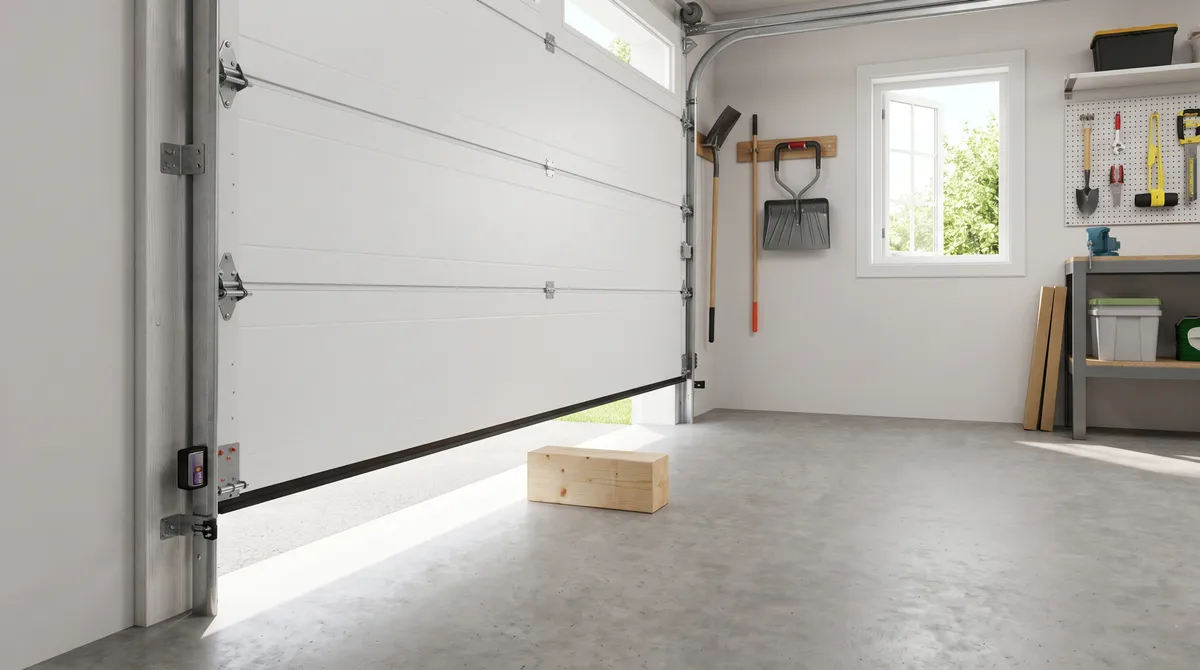
The single most important safeguard is the auto-reverse system, so confirm it works before anything else. Every opener made since 1993 has two reversal mechanisms, and both need to be functioning.
The photo-eyes near the floor should reverse the door the instant their beam is broken, and the force setting should reverse the door if it meets resistance on the way down. Test both, ideally once a month, using the method in our guide on testing your garage door auto-reverse.
If either test fails, treat the door as unsafe for children until it is fixed. A working auto-reverse is the difference between a door that stops on contact and one that does not.
Keep the Controls Out of Reach
A child who cannot operate the door cannot put themselves in its path. Securing the controls is one of the simplest, most effective steps.
Wall Buttons and Remotes
Mount the wall control button at least 1.5 metres, about five feet, above the floor, high enough that young children cannot reach it. This has been a safety guideline for years precisely because a curious child at a low button is a real risk.
Keep handheld remotes out of reach too, not clipped somewhere a child can grab them or left in a spot they can climb to. Treat them like car keys rather than toys.
Keypads and Access Codes
If you use a wireless entry keypad, mount it where an adult can reach it but a small child cannot, and keep the code private. Older children who are taught the code should understand it is not for opening the door to play.
Change the code if it has been widely shared, and remove access for anyone who no longer needs it.
Address Pinch Points and Exposed Hardware
The most common garage door injury to children is pinched or crushed fingers, usually from the gaps between panels as the door moves. A few measures target this directly.
Pinch-resistant panels are designed so the joints between sections close without creating finger-trapping points, and they are well worth it when replacing a door in a family home. On an existing door, keep small hands off the panels entirely as it moves.
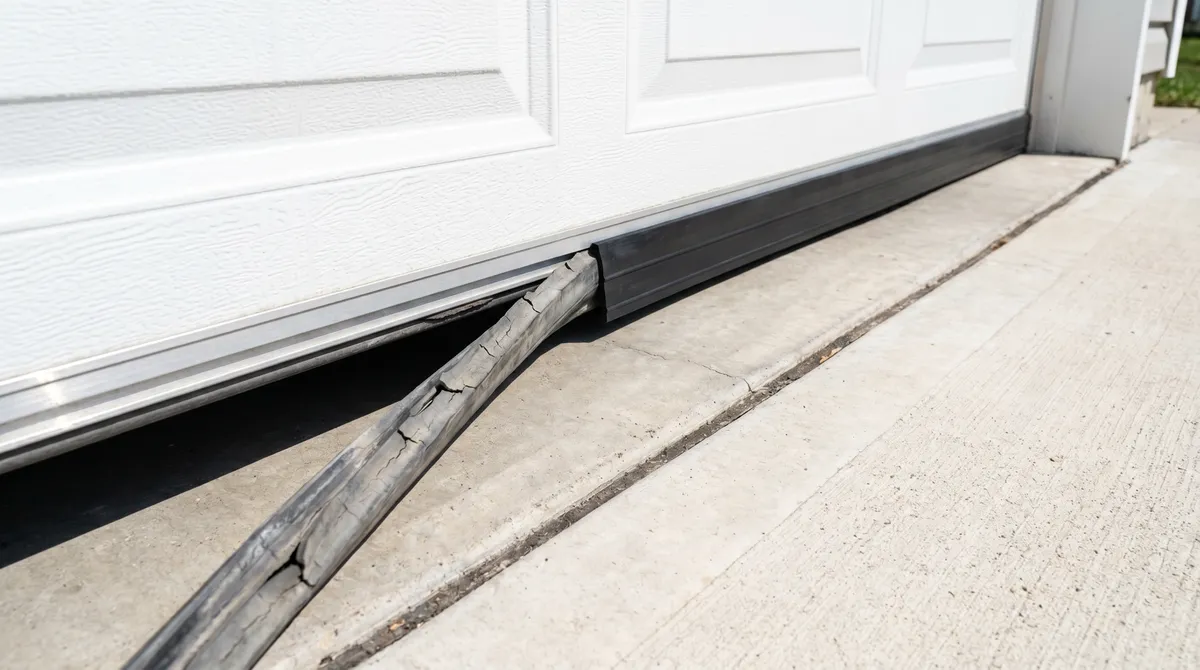
Exposed springs and cables are another hazard. These are high-tension components that should never be touched, so make sure children understand the tracks, springs, and cables are off-limits, and have any damaged hardware repaired promptly.
Set House Rules That Actually Work
Equipment and settings do a lot, but clear, simple rules close the gap. Children follow rules best when they are short and consistent.
The rules that matter most are:
- Never play under or near a moving door, and never sit or stand in the doorway as it operates.
- Never try to beat a closing door by running or rolling underneath it.
- Keep hands off the panels, tracks, springs, and cables at all times.
- Watch the door fully close before walking away or driving off.
- Only adults or supervised older children operate the door.
Walking through these with kids once, then reinforcing them, turns the garage from a hazard into a space they understand how to be safe around.
What Is the Most Common Garage Door Injury to Children?
The most common garage door injuries to children are pinched or crushed fingers, caught in the gaps between panels as the door moves. Small hands resting on a closing door, or curious fingers exploring the joints between sections, are exactly what pinch-resistant panels are designed to protect.
The second most common is being struck by a closing door, which is precisely what the auto-reverse system exists to prevent. This is why testing the reversal and using pinch-resistant panels together address the two biggest risks directly. Injuries from springs and cables are rarer but more severe, which is why those components must stay strictly off-limits to children.
When Can Children Safely Use the Garage Door?
Young children should not operate the garage door at all. The door is too heavy and the consequences of a mistake too serious for a child who cannot yet judge them.
Older children can be taught to use it safely once they reliably understand and follow the rules: never play under a moving door, keep hands off the panels and tracks, never try to beat a closing door, and always watch it finish closing. Even then, supervision is wise until the habits are second nature. A good test of readiness is whether the child consistently waits and watches the door close without being reminded, which shows they have absorbed the reasoning and not just the rule.
When to Bring in a Professional
If your door fails a safety test, has exposed or damaged hardware, or you want to add pinch-resistant panels, it is worth a professional visit. A technician can confirm the auto-reverse is properly set, replace worn parts, and advise on the safest setup for your family.
Our garage door maintenance service includes a full safety check, and we look after families across Aurora and the GTA. For a broader overview, our garage door safety tips cover more ground.
If you want your garage door checked over for family safety, book an inspection online or call us at (647) 930-7997, and we will make sure it is as safe as it should be.