Garage Door Weather Stripping: When and How to Replace It
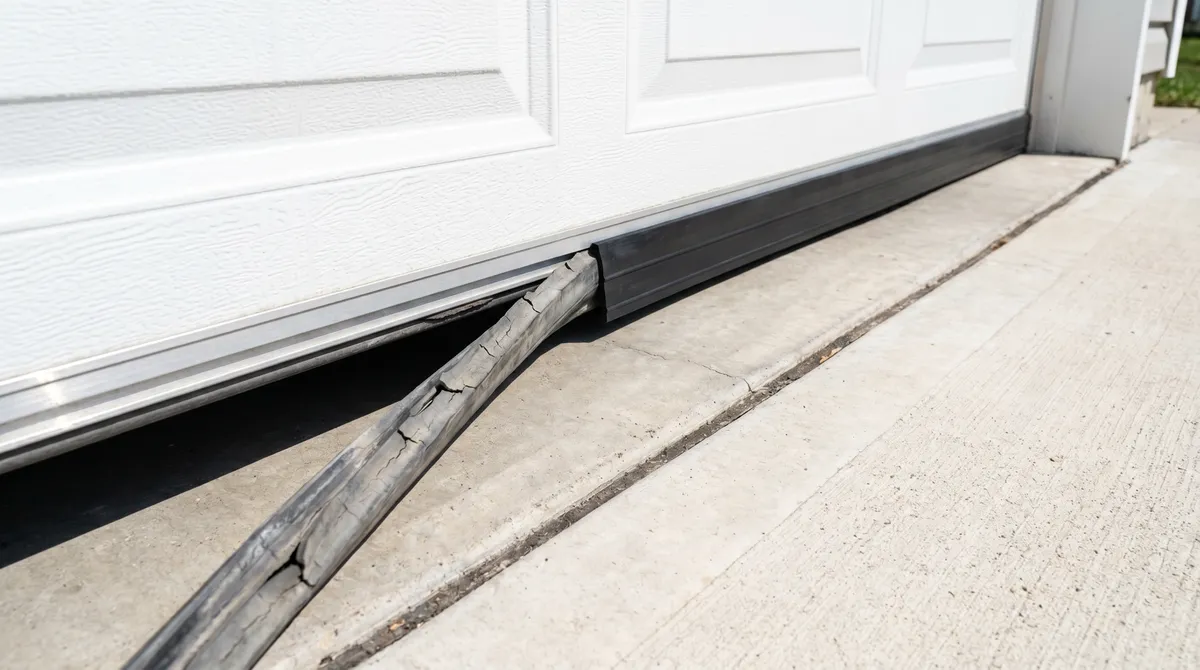
Garage door weather stripping should be replaced when it cracks, hardens, tears, or leaves gaps that let in drafts, water, dust, or pests, which is typically every three to five years for a bottom seal. It is one of the most affordable, high-impact maintenance jobs, and most homeowners can do it themselves.
Worn seals are easy to ignore until a puddle forms inside the garage or insects start getting in. This guide covers what the seals do, the types on your door, how to tell they have failed, and how to replace them step by step.
What Does Garage Door Weather Stripping Do?
Weather stripping is the set of flexible seals that close the gaps around a garage door when it is shut. Their job is to keep the outside out: rain, snowmelt, wind, dust, leaves, insects, and small animals.
On an attached garage, the seals also matter for energy efficiency. They slow heat transfer through the largest opening in that wall, which helps in both the summer heat and the winter cold, a point worth weighing alongside an insulated door. A failed seal quietly undoes a lot of that benefit.
Types of Garage Door Seals
A typical door has seals in three or four places, and knowing which is which makes replacement straightforward.
Bottom Seal (Astragal)
The bottom seal, called an astragal, is the flexible strip along the base of the door that compresses against the floor. It takes the most wear and is the one homeowners replace most often.
Most astragals slide into a metal or vinyl retainer track fixed to the bottom of the door, which makes swapping them simple once you know the profile.
Jamb and Stop Seals
Jamb seals, also called stop-moulding seals, run up the two sides of the door frame and across the top. They are usually a vinyl strip with a flexible flap that presses against the door face.
These take less abuse than the bottom seal but still crack and harden with sun and age.
Top Seal and Threshold
Some doors have a dedicated top seal where the door meets the header. A floor-mounted threshold seal is a separate option that sits on the ground rather than the door, useful where the floor is uneven or you want extra protection against water.
When Should You Replace Weather Stripping?
Replace a seal as soon as it stops sealing. The signs are easy to spot once you look:
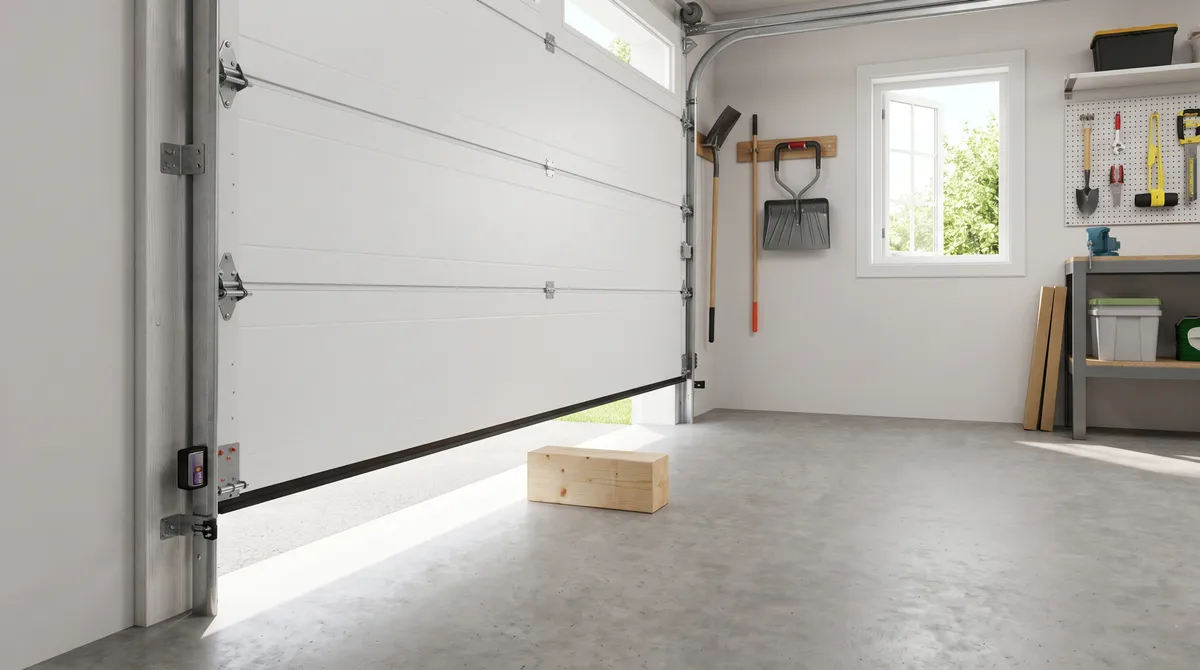
- Visible gaps or daylight under or around the closed door
- Cracked, hardened, or brittle rubber that no longer flexes
- Tears or chunks missing from the bottom seal
- Drafts, water, or debris getting into the garage
- Insects or pests finding their way in
A quick check during seasonal maintenance catches these early. Inspecting the seals naturally fits into a broader tune-up routine.
How to Replace the Bottom Seal
Replacing the astragal is the most common job and takes under an hour. The key is buying a replacement that matches your retainer profile.
- Open the door to a comfortable working height and support it, or work with it down if the retainer is accessible.
- Remove the old seal by sliding it out of the retainer track from one end.
- Measure and buy a replacement seal of the same width and profile, plus a little extra length.
- Lubricate the track lightly with soapy water so the new seal slides in easily.
- Feed the new seal through the retainer channel from one end to the other, then trim the excess.
If the retainer track itself is bent or corroded, it can be replaced too, though that step is a little more involved.
How to Replace Jamb and Top Seals
Jamb and top seals are usually nailed or screwed to the frame rather than slotted into a track. To replace them, pry off the old strip, clean the surface, then position the new one so its flap just presses against the door face when closed.
Do not compress the flap too hard, or the door will bind; a light, consistent contact is what seals best. Fasten it in place and test the door through a full cycle.
How Much Does Weather Stripping Replacement Cost?
Weather stripping is one of the cheapest garage door fixes there is. The seal material for a bottom astragal typically runs in the range of $20 to $60 depending on length and quality, and replacing it yourself adds nothing beyond that.
If a technician handles it as part of a service visit, the labour is modest and often folded into a broader tune-up. Set against the cost of water damage to anything stored in the garage, or the energy lost through an unsealed attached garage, a fresh seal pays for itself quickly.
Choosing the Right Replacement Seal
The most common mistake is buying a seal that does not match your door. Bottom seals slot into a retainer with a specific profile, often a T-shape or a P-shape bead, and the new seal has to match that channel exactly.
Before buying, slide out a short section of the old seal and take it with you, or note the retainer shape and the door’s width. For jamb seals, measure the height of both sides and the width of the top, and add a little extra to every measurement so you can trim to fit.
Getting the profile right is the difference between a seal that slides in and grips properly and one that will not stay seated. When in doubt, a technician can identify your retainer type and supply the correct seal.
When to Call a Professional
Most weather stripping is a confident DIY job, but a few situations are worth a call. If you have a persistent gap after replacing the seal, the door may not be sitting level, which points to a balance or track issue rather than the seal itself.
Our garage door maintenance service includes seal inspection and replacement as part of a full service, and we look after homes across Markham and the GTA. If a draft or leak persists despite a fresh seal, having a technician check the door’s alignment saves you guessing.
If your garage door seals are cracked, gapping, or letting the weather in, book a service visit online or call us at (647) 930-7997, and we will get your door sealed up tight again.