LiftMaster vs Chamberlain vs Genie: Which Opener Actually Lasts
Homeowners comparing garage door openers usually start by comparing brands, and that turns out to be the least useful axis. The three names that dominate GTA garages are LiftMaster, Chamberlain and Genie, and two of them are the same company.
What actually separates one installation from another is drive type, motor type, and whether the door was balanced before the opener went on. This covers how the three brands genuinely differ, and which differences are worth paying for.
Which opener brand lasts the longest?
Service life is set by the installation far more than by the badge on the powerhead. All three manufacturers produce units that comfortably reach ten to fifteen years in a normal household, and all three produce units that fail in three when fitted badly.
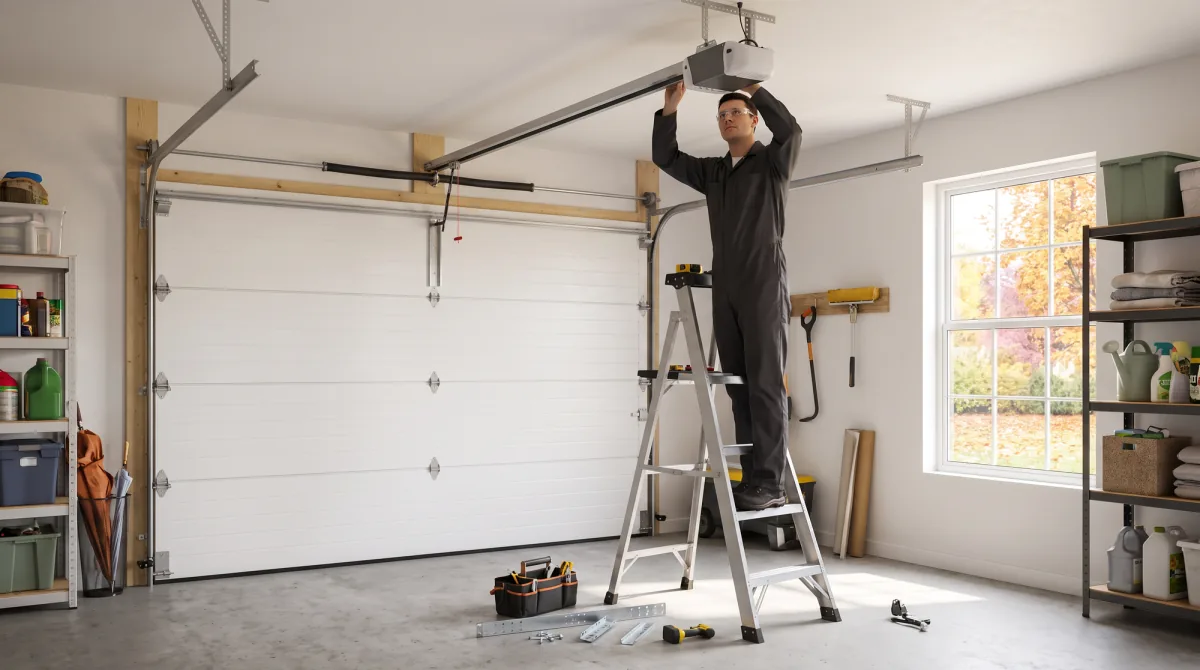
The mechanism is the same regardless of brand. An opener is designed to guide a door that the springs are already counterbalancing, not to lift its weight. When the counterbalance is wrong, the opener makes up the difference on every cycle, and the drive gear inside it wears out years early. That single factor swamps any engineering difference between the three brands, which is why a brand comparison that ignores it is close to meaningless.
The practical version: choose on drive type, motor type and the features you will actually use, then make sure whoever installs it checks the door’s balance first. Our guide to opener installation cost covers that check and why it is the item most often skipped.
LiftMaster and Chamberlain are the same company
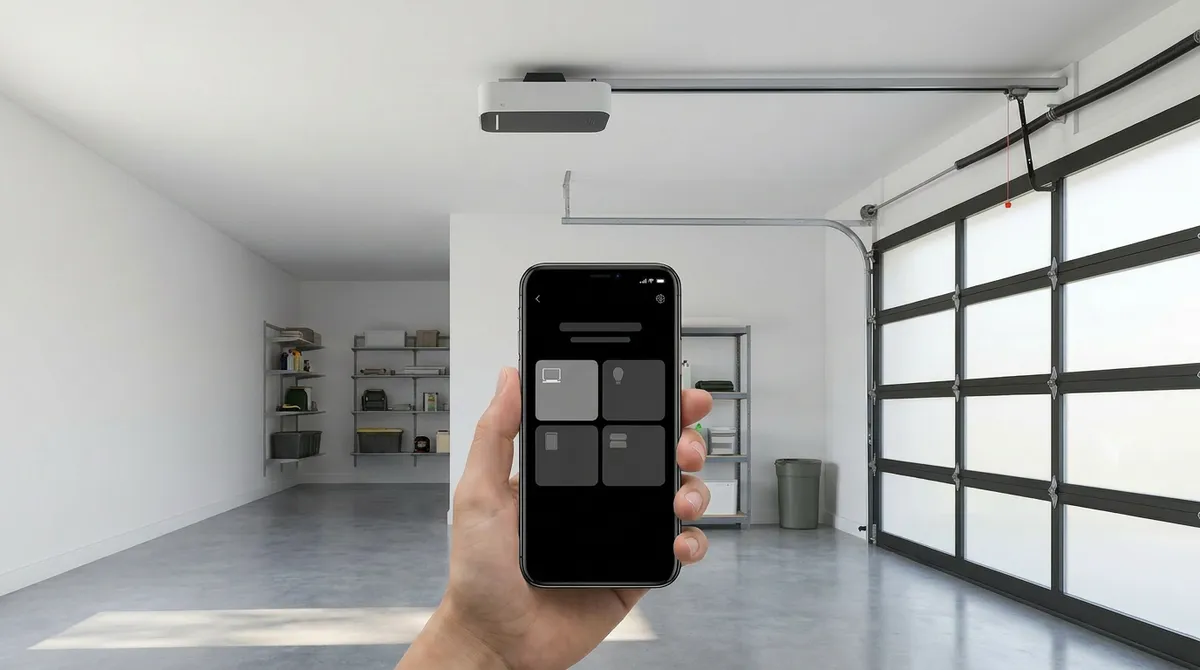
This is the fact that confuses most shoppers. Both brands belong to the Chamberlain Group. They share engineering and they share the MyQ smart platform. The difference is the channel they are sold through.
Chamberlain is the retail line, sold directly to homeowners through hardware and big-box stores. If you are buying an opener off a shelf to fit yourself, this is the line you will find.
LiftMaster is the professional line, sold and installed through dealers. The model range runs broader at the upper end, including wall-mount jackshaft units and heavier-duty motors, and parts move through the dealer network.
Neither is straightforwardly better. The retail line makes sense for a straightforward self-installed replacement. The dealer line makes sense when you want a model that is not sold at retail, or you want the installer to carry responsibility for the whole job. What you should not do is assume they are rival companies producing rival technology, because they are not.
Genie is the genuine third party here. It is a separate manufacturer with its own smart platform, Aladdin Connect, and its own model range, and it competes on much the same ground.
How the three compare
| LiftMaster | Chamberlain | Genie | |
|---|---|---|---|
| Company | Chamberlain Group | Chamberlain Group | Genie, separate manufacturer |
| Channel | Dealer, professionally installed | Retail, often self-installed | Both retail and dealer |
| Drive options | Chain, belt, screw, wall-mount jackshaft | Chain, belt, wall-mount | Chain, belt, screw, wall-mount |
| Smart platform | MyQ | MyQ | Aladdin Connect |
| Motor types | AC and DC, DC on most current models | AC and DC | AC and DC |
| Battery backup | On DC models | On DC models | On DC models |
| Parts channel | Dealer network | Retail and online | Retail and dealer |
| Typical installed | $350 - $600 | $350 - $600 | $350 - $600 |
The installed bracket is the same across all three for a comparable smart unit, which is worth noting because brand is often assumed to be the main cost driver. It is not. Drive type and motor type move the number far more than the badge does.
The specifications that actually matter
Four choices affect how the opener performs, and none of them is the brand.
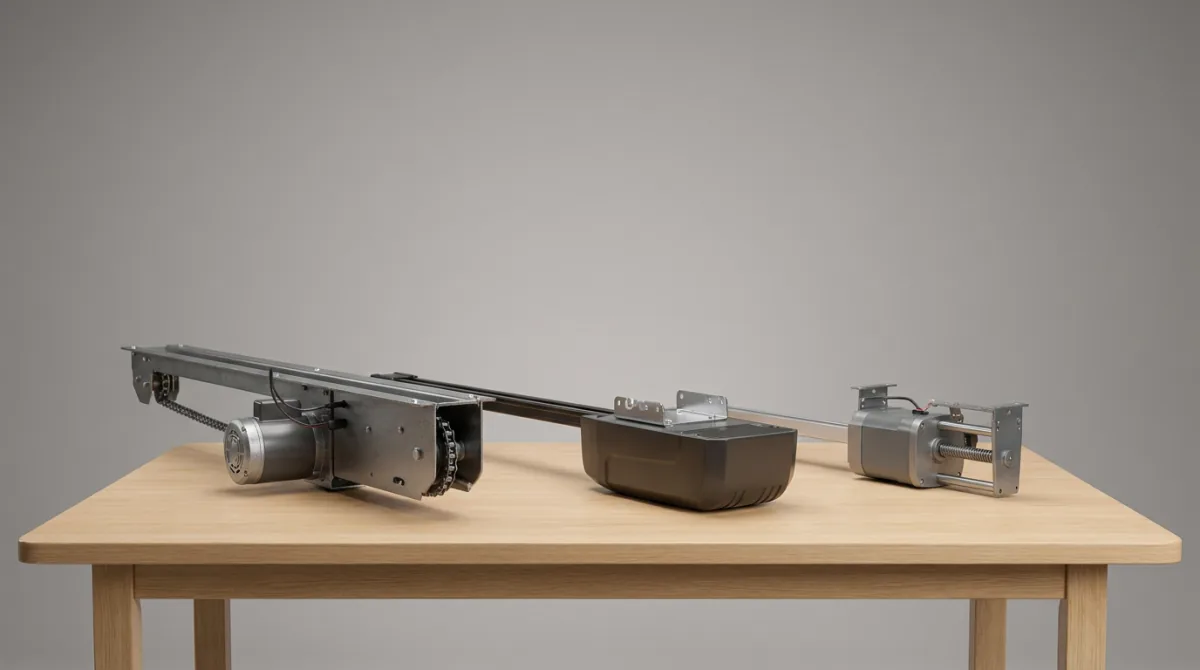
Drive type is the big one. A chain drive is the least expensive and the loudest. A belt drive runs on reinforced rubber and is substantially quieter, which matters directly under a bedroom. A screw drive has fewer moving parts. A wall-mount jackshaft removes the overhead rail entirely and suits garages with limited headroom or overhead storage. We compare these in detail in our guide to belt, chain and screw drive openers.
Motor type splits AC from DC. DC motors run more quietly, start and stop more smoothly, and are the ones that support battery backup. If losing the ability to open the door during a power cut would be a problem, that decides it.
Horsepower must suit the door’s weight, not the previous opener’s rating. A heavier insulated double door needs more than a half-horsepower unit, and inheriting an undersized rating from whatever was there before is a common and expensive mistake.
Battery backup is worth more in Ontario than it might appear, given how reliably winter storms take out power. A DC opener with backup will cycle the door a limited number of times on battery, which is the difference between getting the car out and not.
- Room above the garage: belt drive or wall-mount, DC motor
- Detached garage, nobody overhead: chain drive is fine and cheaper
- Low headroom or overhead storage: wall-mount jackshaft
- Heavy insulated double door: size the horsepower up, do not inherit it
- Frequent outages: DC motor with battery backup
Parts availability, and why model age beats brand
The question we get asked most often is which brand is easiest to get parts for. The honest answer is that model age matters more than manufacturer.
Every manufacturer discontinues models, and once a board or gear set leaves production, a repair stops being a question of price and becomes a question of whether the part exists. That applies equally to all three brands. An eighteen-year-old opener of any make is a parts-availability problem.
Where the channel does make a difference is on current models. LiftMaster parts flow through the dealer network, which can mean quicker sourcing on a professionally installed unit. Chamberlain and Genie parts are more widely available at retail, which suits someone comfortable doing their own work. Neither advantage is large enough to drive the buying decision on its own.
The practical takeaway when repairing rather than buying: check parts availability before paying for a diagnostic. We do that as a matter of course on older units, because there is no sense charging to diagnose a fault whose part is no longer made. Our guide to what fails on an opener covers the age test for repairing against replacing.
One thing to check before you buy anything
Any opener made before 1993 should be replaced rather than repaired, whatever the brand. Units of that era predate mandatory photo-eye safety sensors and use fixed codes rather than rolling codes, meaning a neighbour’s remote on the same frequency can open your door. That is a safety and security decision rather than a cost one.
For everything newer, choose the drive type and motor type that suit your garage, make sure the horsepower matches the door, and have the door’s balance checked before the opener is fitted. Those four decisions will determine your experience far more than which of the three names is on the powerhead.
We install and service all three brands across the GTA. Our garage door opener service includes checking the door’s balance before fitting, matching horsepower to the actual door weight, and a written quote before work starts.
Call 647-930-7997 or book an appointment and we will tell you what your garage actually needs, including when the opener you already have is worth keeping.