Garage Door Keypad Not Working? Fixes to Try First
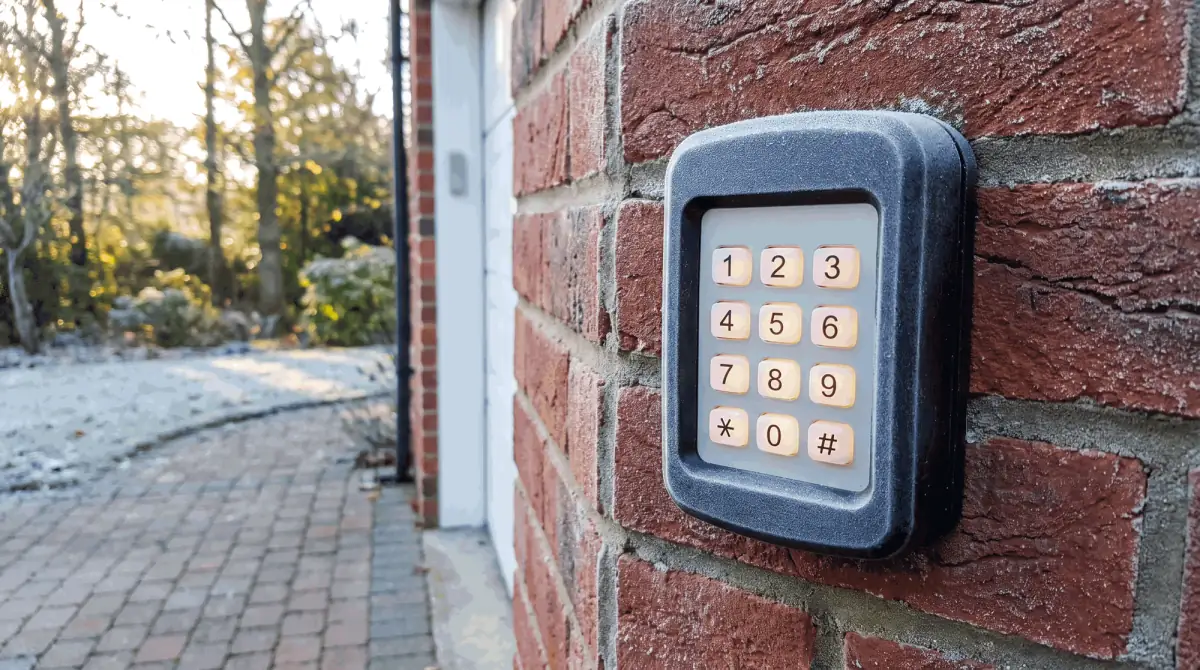
Standing on the driveway pressing a keypad that has stopped responding is a small problem that feels much larger in the cold. The good news is that it is usually a battery, and the fix takes about two minutes once you know what to look at.
This works through the checks in the order that resolves the most calls fastest, and covers the one test that tells you whether you are dealing with a $40 part or something inside the opener.
Change the battery first
More keypad faults come down to a weak battery than everything else combined, and there is a specific symptom that makes it obvious once you know it.
If the keypad backlight still illuminates when you press a key but the door does not respond, that points strongly at the battery. Lighting the keys draws very little power. Transmitting a radio signal strong enough to reach the opener draws considerably more. A battery can sit in the middle of that range for weeks, lighting up reliably while failing to transmit, which is why people conclude the keypad is broken when it is merely tired.
The battery compartment is normally behind a sliding cover on the back of the unit, or under a flap at the base. Most keypads take a single 9V or one or two coin cells. Use a fresh alkaline battery from a sealed pack rather than one that has been in a drawer, because a partly discharged battery reproduces the exact fault you are trying to fix.
While the cover is off, look at the contacts. Green or white powdery residue means moisture has been getting in, and that is worth addressing at the same time.
Why it always happens in winter
Keypad failures cluster between November and March, and the reason is straightforward: batteries lose usable voltage as the temperature falls.
A battery that has enough charge left to transmit at 10 degrees can drop below the threshold at minus 10. The keypad has not changed and neither has the opener. The battery simply crossed a line that only exists in the cold, which is why so many of these faults appear overnight on the first properly cold morning and sometimes recover by mid-afternoon.
The practical consequence is a maintenance habit rather than a repair. Changing the keypad battery every autumn, whether or not it has started misbehaving, prevents the large majority of winter keypad calls. It costs a few dollars and takes two minutes, and it is the single most effective thing you can do about this.
Reprogramming the code
If a fresh battery has not fixed it, the next possibility is that the keypad has lost its pairing with the opener. This happens after a power surge, after the opener’s memory has been erased, or occasionally for no visible reason at all.
The sequence varies by manufacturer, but the principle is consistent:
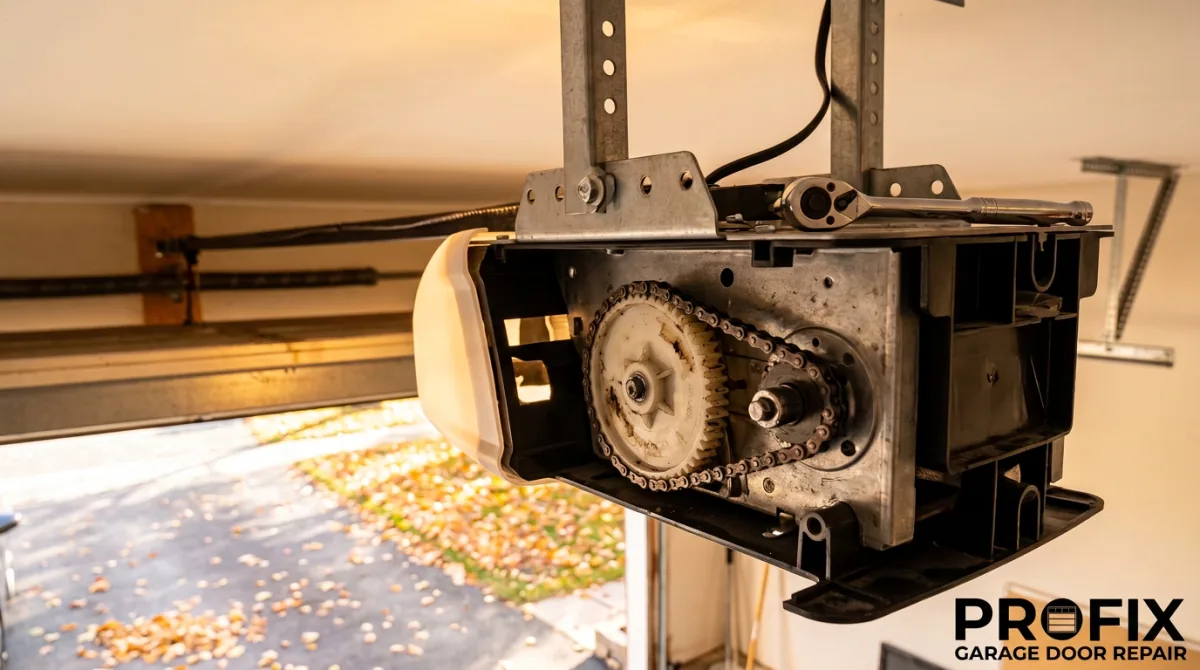
- Find the learn button on the opener powerhead, the motor unit mounted to the ceiling. It is usually under a light cover or a panel on the side, and it is often coloured.
- Note the colour of that button. It identifies the generation, which determines which keypads and remotes are compatible. This matters if you are replacing rather than reprogramming.
- Press the learn button once. An indicator light will come on, and you generally have around thirty seconds before it times out.
- Go to the keypad, enter your chosen PIN, and press enter or the program key.
- Test it. The opener should respond, and usually the lights on the powerhead will flash to confirm the pairing.
Check the manual for your specific model before starting, because the timing window and the exact button sequence differ between manufacturers and generations. If the opener is a LiftMaster, our guide to reading its diagnostic lights covers finding the model number and what the learn button colour tells you.
Symptom to cause, at a glance
The pattern of what works and what does not narrows the fault quickly, and it is worth running through before changing anything.
| What you observe | Most likely cause | Cost to fix |
|---|---|---|
| Keys light up, door does not respond | Weak battery | Battery only |
| Nothing lights at all | Dead battery, or failed keypad | Battery, then replacement |
| Worked yesterday, failed on a cold morning | Battery below its cold threshold | Battery only |
| Some digits register, others do not | Corroded contacts behind the keys | Keypad replacement |
| Remote works, keypad does not | Keypad, battery or lost pairing | Battery or reprogramming |
| Neither remote nor keypad works | Opener receiver | Service call |
| Nothing works, including the wall console | Power, breaker, or opener | Check the outlet first |
The rows split cleanly into two groups. Everything above the remote test is inexpensive and usually a homeowner fix. Everything below it points inside the opener, which is a different conversation.
The test that tells you where the fault is
One check separates a cheap fix from an expensive one, and it takes five seconds.
Try the remote. If the remote opens the door normally, then the opener, its radio receiver, the motor and the door are all working correctly. That narrows the fault to the keypad, its battery, or its programming, and all three of those are inexpensive to resolve.
If neither the remote nor the keypad works, but the wall console inside the garage does, the opener’s radio receiver is the more likely suspect. That is a different repair and a considerably more significant one.
If nothing works at all, including the wall console, check the outlet and the breaker before assuming anything has failed. A tripped breaker after a storm mimics a dead opener convincingly. Our guide to what fails on an opener and what it costs covers what each of those symptoms points at.
Weather, corrosion and where it is mounted
Keypads are the only part of a garage door system deliberately mounted outdoors, and they are usually mounted wherever was convenient rather than wherever was sheltered.
The failure that follows is distinctive: some digits register and others do not. That is moisture reaching the contact pads behind the key membrane and corroding them. Once that has happened, cleaning rarely restores reliable operation, because the corrosion is underneath a seal you cannot properly get behind. A keypad is an inexpensive part, so replacement is normally the sensible answer.
Two things prevent it. Mount the keypad where it is sheltered from direct spray thrown off the driveway, ideally under an overhang. And when fitting a replacement, run a thin bead of silicone along the top edge of the backplate so water running down the wall is directed around the housing rather than behind it.
Around Thornhill, where a lot of the housing stock has keypads fitted at the time the door went in and never touched since, the combination of an original keypad and a first hard freeze accounts for a steady run of calls every year. Both halves of that are preventable with a fresh battery in October and a keypad that is not sitting in the weather.
When it is worth calling
Work through the list first, because three of the four fixes cost nothing but a battery. Change the battery, try the remote to isolate the fault, and attempt a reprogram.
If the remote works and a fresh battery plus reprogramming has not brought the keypad back, the keypad itself has failed and replacing it is straightforward and inexpensive. If the remote does not work either, the fault is in the opener and worth diagnosing properly before parts get thrown at it.
We fit and program keypads across the GTA, and our garage door opener service covers remotes, keypads, receivers and the units themselves. Call 647-930-7997 or book an appointment, and if you are locked out with the car inside, mention it so we can prioritise the visit.